Intralogistics and material handling
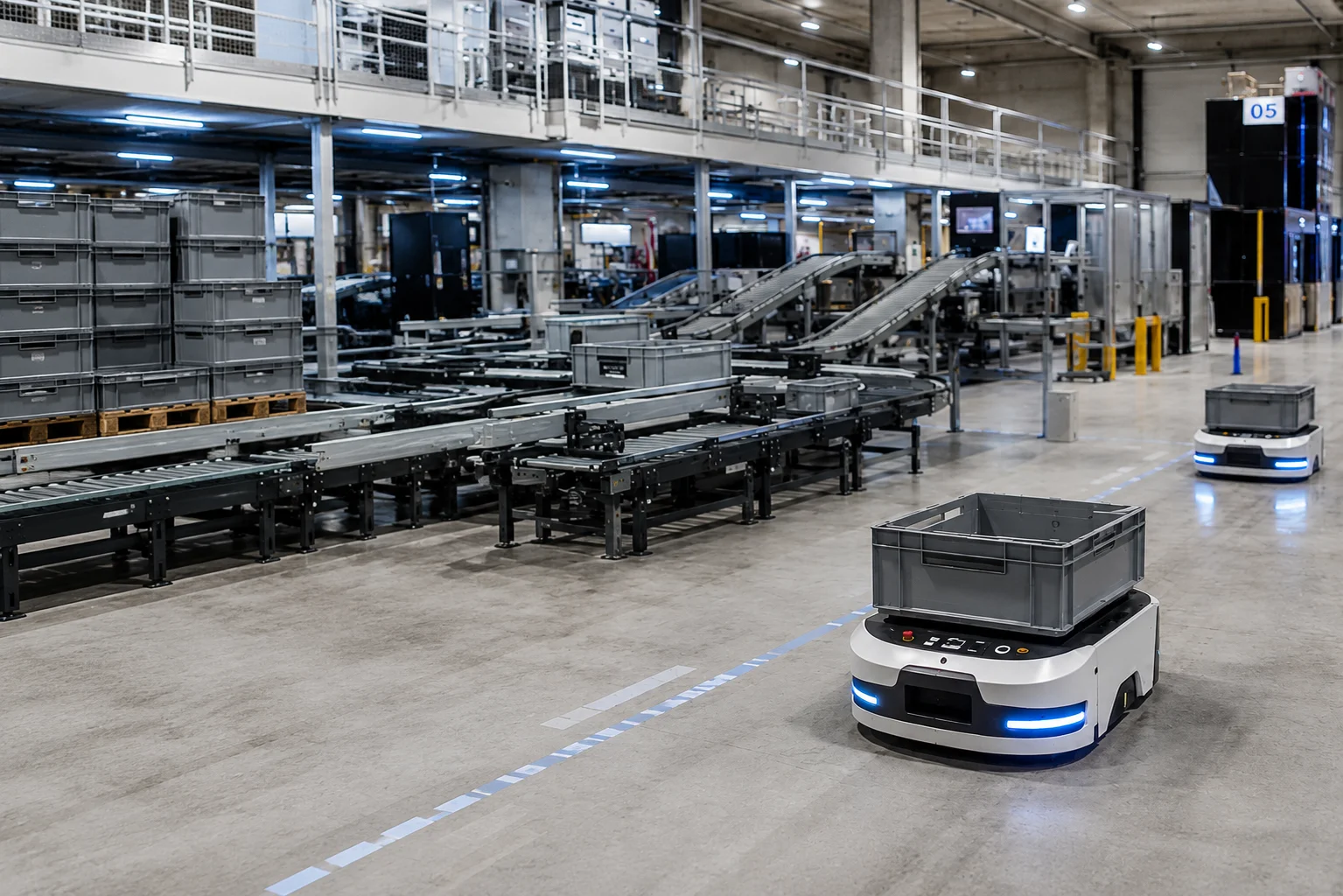
Intralogistics solutions designed to coordinate the movement of materials, components and products within the facility, ensuring availability, continuity and integration with the production process.
Manage the flow of materials within production
Intralogistics covers the solutions used to move materials, components and products within a manufacturing facility. The goal is not simply to move a load from A to B, but to ensure every material is available where and when production needs it. Material handling therefore becomes an active part of the manufacturing process, coordinating its different operating stages.
Technologies and systems
Conveying systems
Conveyor belts, roller conveyors, chain systems and devices for the automatic transfer of materials.
AGV (Automated Guided Vehicle)
Automatic vehicles driven along defined paths for repetitive handling operations.
AMR (Autonomous Mobile Robot)
Autonomous systems capable of adapting their path to operational needs.
Sorting and buffering systems
Solutions dedicated to the flow management and the temporary accumulation of materials.
Filics Streamliner
A new generation of autonomous systems for intelligent pallet handling, designed to increase operational flexibility and optimize available spaces.
Learn more about Filics Streamliner
Advantages
Technical
benefits.
-
01
Material-flow control
Improved visibility of internal material handling, with materials tracked and available throughout the different stages of the production process.
-
02
Reduced manual handling
Automation of repetitive or heavy transfers, reducing manual intervention and improving continuity, safety and operational ergonomics.
-
03
Logistics and production alignment
Alignment between availability of materials, production progress and needs of individual operating stations.
-
04
Scalability and flexibility
Solutions adaptable to layout variations, production volumes, product types and future organizational needs.
Benefits
Business
benefits.
-
01
Reduced downtime
Fewer waiting, lack of materials or slowdowns due to uncoordinated internal flows.
-
02
Optimized Space Utilization
More efficient organisation of production and logistics areas, reducing bottlenecks, unnecessary travel distances and operational congestion.
-
03
Phased system evolution
Possibility of introducing automation and progressive integrations, enhancing existing infrastructures and accompanying production growth.
LET'S GET STARTED